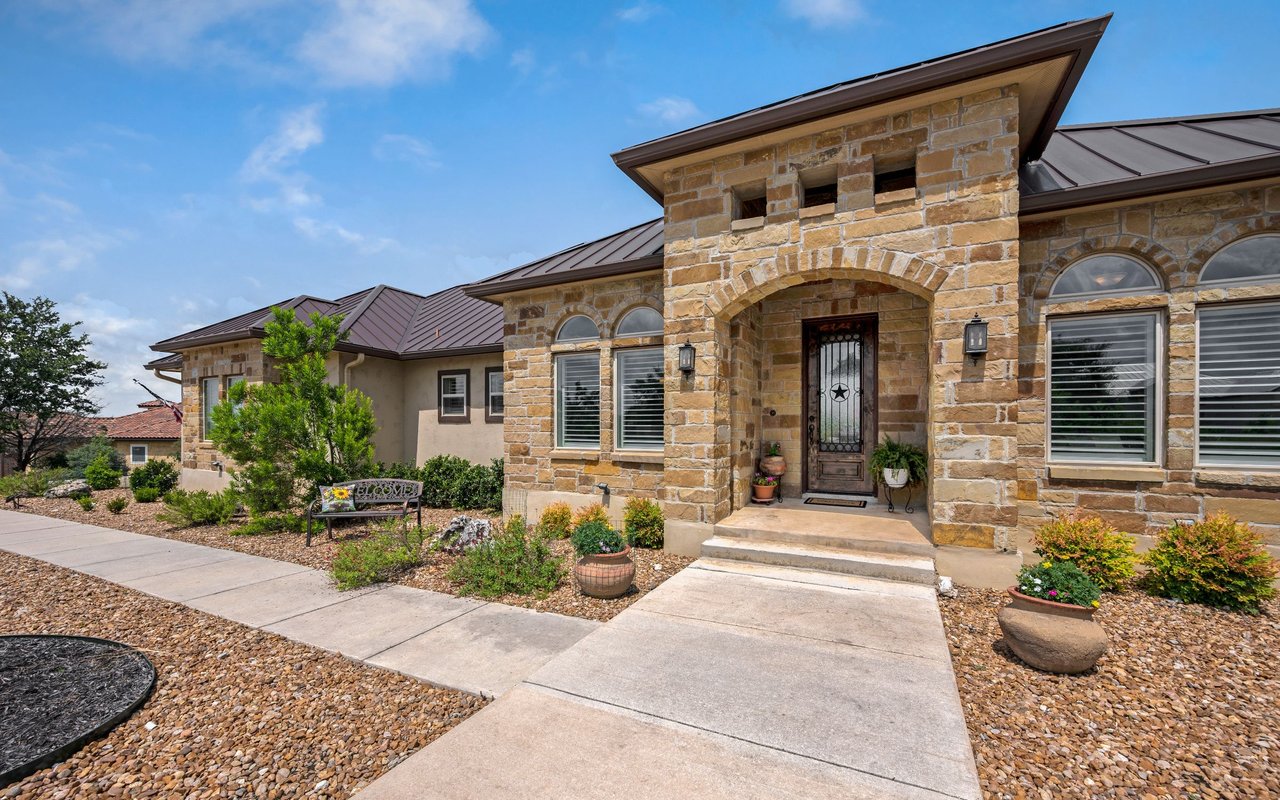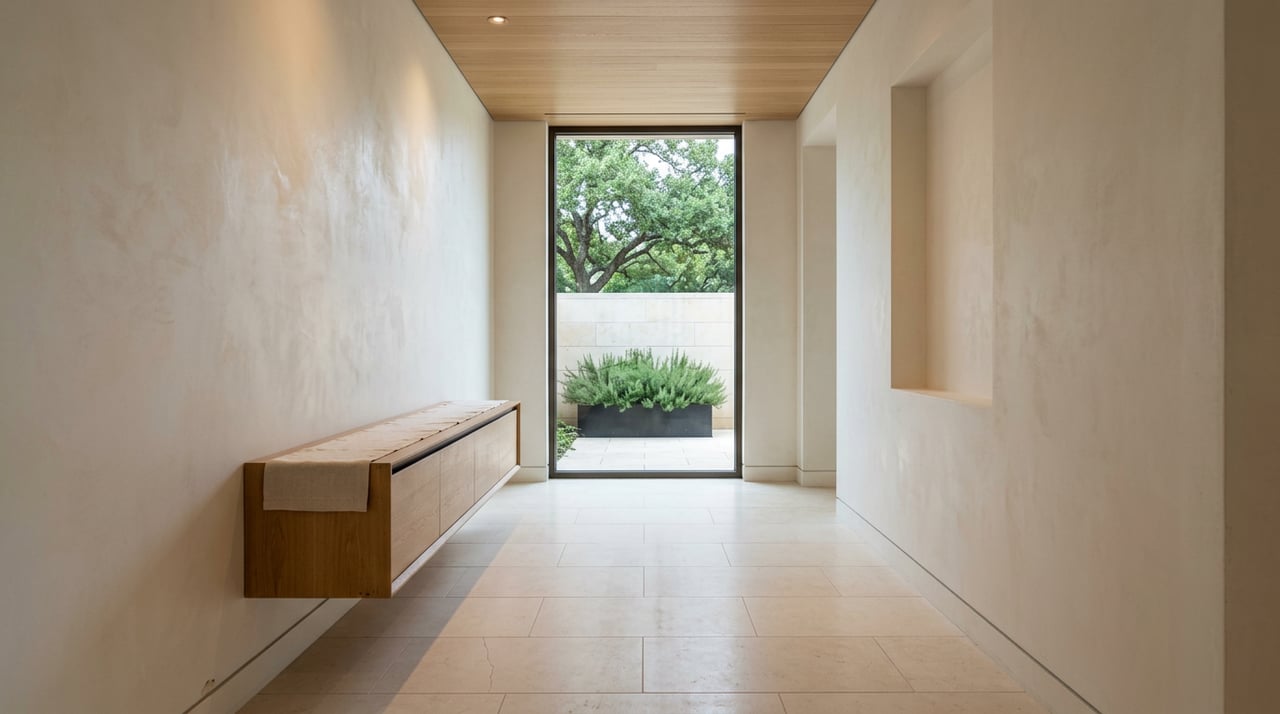
Somewhere between the second showing and the offer, a buyer new to Spanish Oaks usually asks the same question in the same tone. If we buy the house, we get into the club, right? The honest answer is no, not automatically, and the fact that the question keeps landing at that stage tells you how thoroughly the neighborhood's marketing has fused two transactions that are legally and financially separate.
Understanding where they separate is the difference between paying for a lifestyle and paying for the option to buy that lifestyle later, on someone else's timing. That is the piece the MLS price never shows.
Two transactions, not one
A purchase inside the gates is a residential real estate closing. It conveys the house, the lot, and access to Lake Travis ISD boundaries, the Fish Camp pond, the community trails, and the guarded entry. It does not convey a Spanish Oaks Golf Club membership. The club is a separate legal entity with its own admission process, and the community's own resale materials confirm that memberships are offered without the prerequisite of owning property in the Spanish Oaks community. The inverse is also true. Buying the home does not put you in the clubhouse.
That framing matters because a lot of public write-ups blur it. One widely cited overview flatly asserts that the only way into the club is to buy a home in the area, while the club itself publishes the opposite. Both cannot be right. Reading the club's own language wins.
The admission process itself is the second transaction. Membership is by invitation and approval, and the process typically involves sponsorship by existing members, an application, interviews, and board approval. A buyer without a sponsor is not blocked from closing on a house. They are blocked from turning that house into the community's marquee amenity on their own schedule.
What the equity model changes
The initiation number does most of the sticker-shock work in comparison guides. Public figures for Spanish Oaks Golf Club cluster between $100,000 to $200,000 depending on timing, plus monthly dues, with recent reporting placing the top end at a $200,000 initiation fee and monthly dues of $1,365 for golf and food only. Compared line-for-line against a resort-operated club, that reads as expensive.
The line-for-line comparison misses the structure. Spanish Oaks operates as a member-owned, equity club, which is fundamentally different from Barton Creek's resort-operated model, and member ownership means the members control governance, dues structure, capital improvements, and admission decisions. An equity initiation is a balance-sheet event, not a sunk cost. Local reporting frames the practical implication directly: the $150K–$200K initiation is recoverable equity, not a fee, and over a 10-year hold the effective annual cost is often comparable to Barton Creek's non-equity model.
The reframe worth carrying into your underwriting: you are not spending the initiation. You are converting cash into a membership interest that may transfer when you exit. Model it as a capital allocation with a recovery assumption, not as an amenity fee.
That reframe reshapes the tax posture, the estate posture, and the negotiation posture, and none of it shows up in the listing photos.
What the MLS price is quietly telling you
The residential side has its own signals. Over the twelve months ending mid-2026, the reported picture across Spanish Oaks combines a median sale price of $3,278,000, up 6% from the prior twelve months, with homes averaging 109 days on market compared to a national average of 47 days and, in a separate cut of the data, homes selling after 163 days on the market compared to the national average of 52 days. Different windows, same conclusion. This is a slow-turning market on top of a fast-appreciating one.
Two forces are pushing in opposite directions and both are structural. Supply is capped by design. The community's 400-home cap means membership availability tracks directly with real estate turnover, and when homes sell, memberships transfer or become available. Demand is filtered. A buyer who does not intend to seek membership behaves differently from one who does, and a seller whose sponsor pipeline is warm can transact differently from one whose is not. The long marketing times are less a signal of weakness than a signal that these are matched trades, not commodity trades.
The listings themselves show the range. Current inventory in the community spans from a sub-$1M home on Beautybrush Drive to an $8.9M estate on Overlook Pass and includes new construction on lots north of four acres. That distribution is a reminder that the "median" is a mathematical convenience. A three-bedroom lock-and-leave in Verde Trails, a Hillside custom on golf frontage, and a preserve-backing estate are three different products competing for three different buyers under one neighborhood name.
Where the sponsor question actually surfaces
Buyers who ask about membership early tend to close cleanly. Buyers who assume membership will resolve itself after closing tend to encounter one of three frictions.
- Timing. Even a warmly sponsored applicant is on the club's calendar, not the closing calendar. If a family is moving for a golf-driven lifestyle, the interval between move-in and first tee time is a real number that deserves a real answer before the option period expires.
- Category. Full Golf, Junior Golf, and National Golf memberships are available at Spanish Oaks Golf Club. The category you qualify for and the category you want are not always the same, and the category shapes the monthly cost line for the life of the membership.
- Transferability. Equity clubs handle exits through the club's own rules, not the MLS. A seller counting on a membership premium in their sale price is making an assumption that the club's transfer policy has to actually validate.
Any of those becomes a re-trade risk if it surfaces after the offer is accepted.
Where sources disagree, and why that is your diligence checklist
Public materials disagree on the community's most basic numbers. On the member cap, one national guide places it at 300 and requires an invitation, a local competitor guide states a hard 450-member cap, and a third local source pegs the community at 400 homes and treats memberships as tracking home turnover. Home counts vary too, with older material describing over 1,200 acres with over 396 homes. Course architecture credit even splits between Bobby Weed in most sources and Bob Cupp in one.
None of that is fatal. All of it is a reason to verify the specific number that would move your decision directly with the club and with a broker who has closed inside the gates recently. Every one of those numbers is knowable. Very few of them are current on the open web.
Questions worth answering before you write the offer
- Is the seller a club member, and if so, what does their transfer or resignation election look like?
- Do you have or need a sponsor, and where are they in your existing network?
- Which membership category matches your household's actual use, not your aspirational use?
- What is the club's current initiation, dues, minimums, and assessment history, in writing, dated?
- What capital projects are the members currently funding, and how does that affect your first three years of dues?
- If membership is delayed or denied, does the house still make sense on its own?
The last question is the one that separates a lifestyle purchase from a lifestyle assumption.
FAQ
Do I have to be a Spanish Oaks resident to join the club? No. Per the club's own materials, membership does not require owning property in the community. Practically, most members are residents, and the sponsor networks are denser among neighbors, but residency is not a gate.
Will buying a home in Spanish Oaks put me on a waitlist automatically? No. There is no automatic application tied to closing. Interested residents pursue membership through the club's separate process. Starting that conversation before the option period ends is the more common playbook.
Is the initiation refundable? It is structured as an equity interest in a member-owned club rather than a fee, which is why local advisors describe it as recoverable over a long hold. Actual mechanics, timing, and any conditions live in the club's current membership documents, and those should be read, not summarized.
Why do homes sit longer here than the national average? Two reasons. The buyer pool is narrow, and the trade often has to match on both the house and the membership pathway. Long marketing times in a capped, appreciating community are a feature of the structure, not evidence of soft demand.
Spanish Oaks rewards buyers who treat the house and the club as two decisions and price each one honestly. If you are weighing a purchase inside the gates and want the membership question answered before you write an offer rather than after, Nicole Cooper can walk you through what the current inventory, the current club posture, and your specific use case add up to. Request a live video call and bring the questions above.